

Posture is a very important yet little known part of life for a pianist. Poor seating posture risks developing musculoskeletal injuries, tendinitis, carpal tunnel syndrome, and chronic pain. Proper posture while playing the piano enables expressiveness through motion, therefore enhancing endurance and precision. No matter your level of proficiency, as a pianist, posture is essential for one’s longevity in music. In this article, we will help you understand how to achieve the most effective posture suitable for an optimal practicing and performing experience.
To dive deeper, read Top Picks for Keyboard and Piano Benches in 2025
The Role of Posture in Piano Performance
Correct posture proper ease movement and eliminates any chances of physical strain. When seated, the spine assumes a neutral position, the shoulders are relaxed, and the arms are not confined to a particular range of motion. This alignment provides a biomechanical advantage in energy transfer from the body to the fingers, which enables the pianist to control dynamics and reduces fatigue during prolonged sessions. On the contrary, slouching compresses the diaphragm, restricts airflow, and reduces range of motion. This ultimately stifles technical agility as well as emotional expression.
Posture Errors and Their Effects
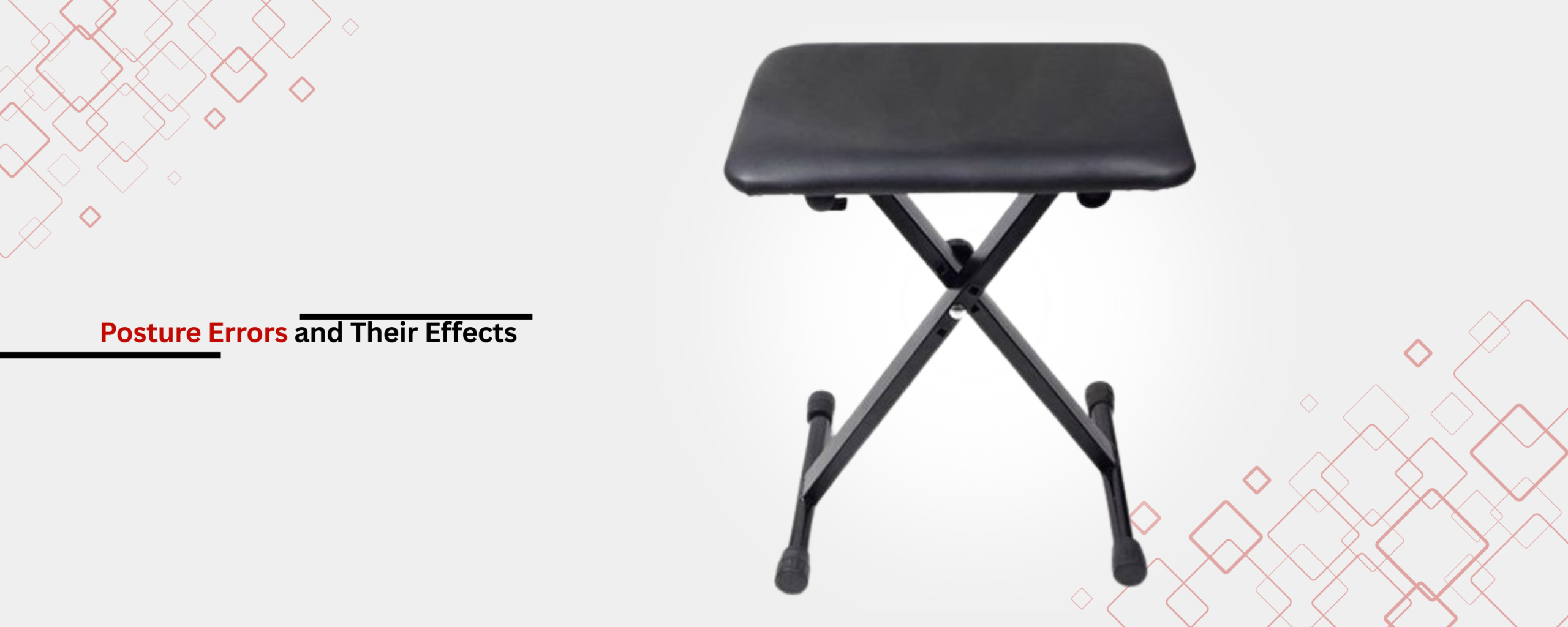
Most pianists do not realize that their playing incorporates posture habits that can be detrimental over time. These include:
- Incorrect Bench Height: If the piano bench is too low, the arms will be forced to rise, which strains the shoulders. If it is too high, the wrists may sag to the level of the keyboard, which is also detrimental to wrists.
- Improper Distance From the Piano: Sitting too close does not allow for proper elbow movement, while sitting too far forces the torso to lean forward, causing strain and instability to the spine.
- Feet Placement: Letting the feet dangle or tucking them under the bench causes the body to be off-balance and limits pedal functionality.
Over time, one is likely to develop some of the following conditions, such as tendinitis, carpal tunnel syndrome, and chronic back pain, further reinforcing the need for proper posture control.
Ergonomic Principles for Pianists
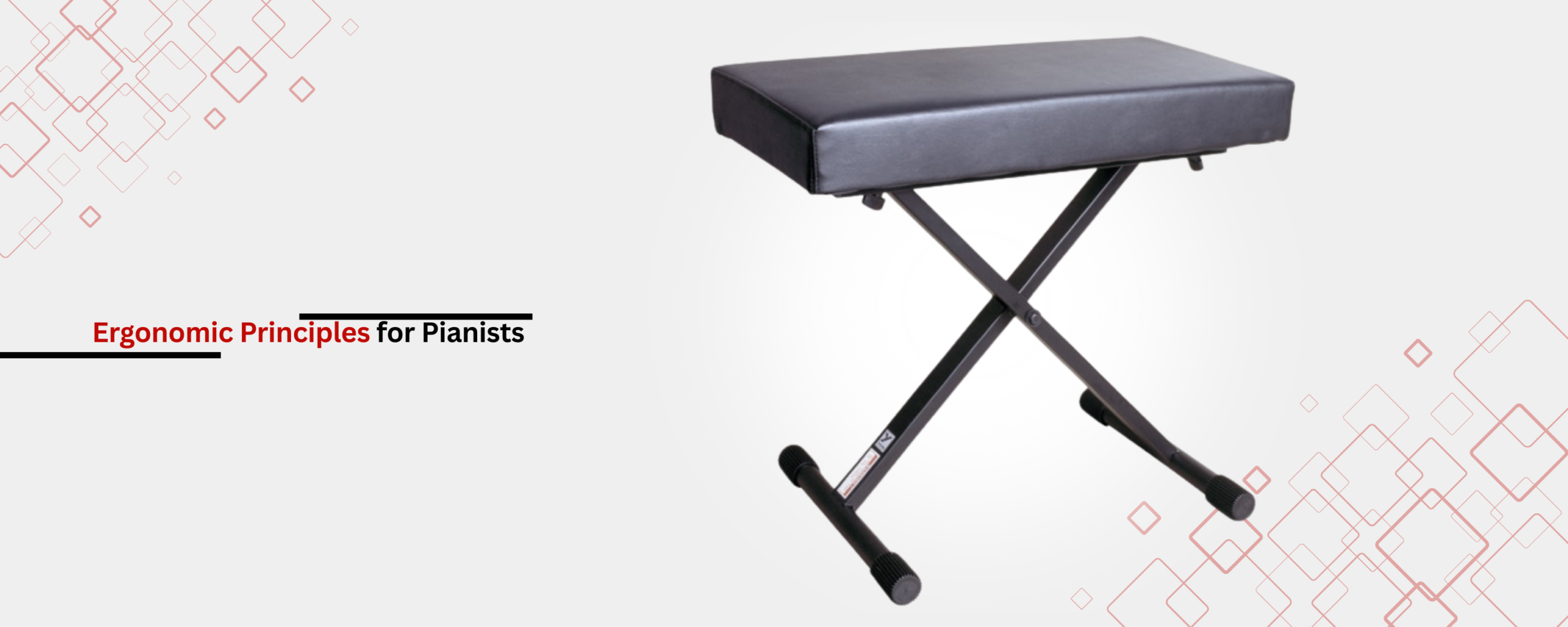
We can solve the ergonomic principles of an ideal posture through fixing:
- For relaxed shoulders and neutral wrists, arms should go on the keys in a position where elbows seat on the piano with an obtuse angle mere to 100–110 degrees.
- The ears should be positioned above the shoulders and hips, which creates a neutral line, meaning there is no hunch or bridge on the back and forces provide ideal support to the leg.
- The feet rest flat on the ground or on a footrest with the knees positioned just below hip height.
A tailored piano bench enables the intuitive approach to be maintained by providing adjustable height, adequate padding, and non-slip features.
Adjusting Your Desk
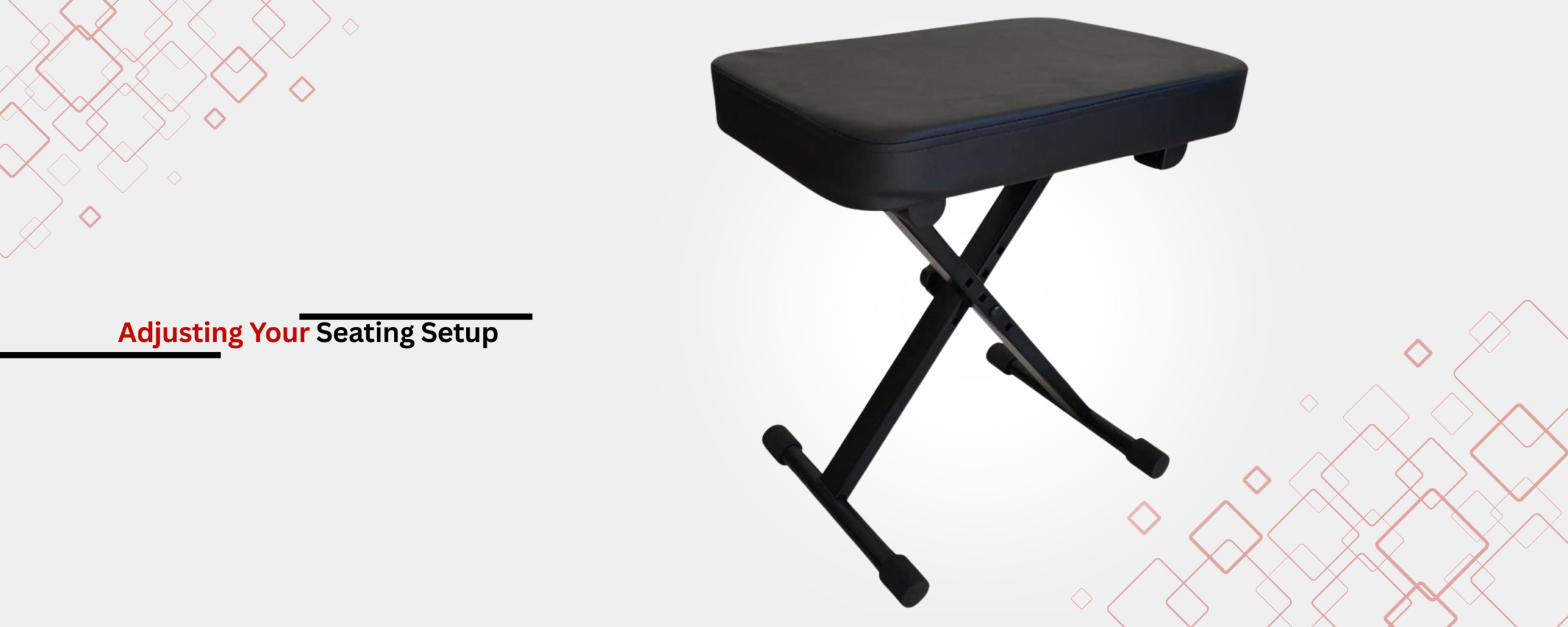
To optimize posture, three factors need to be controlled:
- Bench Selection: An adjustable bench that allows tailored height will best accommodate varying body types, preferences, and playing styles. Benches with height adjustment mechanisms utilize hydraulics or spindles, leading to easier, more precise customization.
- Distance from the Keyboard: The position of the bench must allow the forearms to rest parallel to the floor when the hands are on the keys.
- Supportive Accessories: Providing lumbar cushions or rolls may ease discomfort for players with a specific ergonomic issue; however, they do not substitute for proper bench adjustment.
Choosing the Right Piano Bench
Some features can be ignored but will undoubtedly affect posture:
Personal preference is important, but a lack of these features along with adjustability will affect posture severely.
- Adjustability: The level at which the keyboard is set ensures the neck is not craned to see the console.
- Cushioning: The cushioning should be medium soft so the pelvis sinks in without slumping.
- Stability: Legs that do not shift during vigorous play alongside a slip-resistant base are essential.
Conclusion
An appropriate seating posture aids in enhancing the performance of a pianist, integrating physical health and technical skills. Supporting ergonomic health also comes from posture-specific technologically advanced aids by brands such as 5 Core, Gleam, Roland, and On Stage. As these brands renew their designs and technology, the tools provided to musicians will indeed change to embrace materials and features beyond imagination. The piano world is ever-evolving but one thing remains constant: safeguarding against issues of today allows performers to create songs beyond years. Pianists maintaining unrestricted posture in performance ensures that their creativity is shielded regardless of what awaits in the following pages.