

Bench alignment can make or break your posture at the piano. As PianoTV explains, the bench should be centered with middle C and placed far enough back so that elbows fall naturally at the sides, not tucked behind or stretched forward.
Too close, and arms cramp with curled wrists; too far, and the back rounds and shoulders tense. The site stresses that your forearms should rest parallel to the floor or slightly angled downward, with weight balanced toward the front half of the bench for stability and freedom of movement.
If you’ve ever squirmed through a lesson or found yourself slumping halfway through practice, odds are your bench wasn’t quite where it needed to be. The way you line up your seat with your instrument has a huge impact on comfort and sound. When you dial it in, good posture and free movement feel effortless, not forced.
The Real-World Way to Set Up Your Bench
1. Start with Height:
Don’t overthink it—sit on your bench and let your hands fall naturally to the keys. Are your elbows pretty much in line with the keyboard? That’s your zone. If they’re way above or below, adjust up or down until your arms feel easy, not stretched.
2. Check Your Distance:
Sit too close, and you’re bunched up. Too far, and you’re reaching just to hit middle C. Slide in so your hands land on the keys with a relaxed bend in your elbows—no locked arms, no hunching required.

3. Square Up:
Align your belly button (or roughly your center) with middle C if you’re playing solo. For lessons or duets, both players should line up to their main spots on the keyboard—no leaning or twisting.
4. Feet Flat:
Keep both feet on the floor or a riser if you’re on the shorter side. Dangling legs mean less control and extra fatigue, especially with pedal work.
5. Listen to Your Back:
Notice nagging aches or a pulling feeling in your shoulders? Something’s off. Tweak your height or distance until sitting comfortably feels, well, comfortable.
Products That Make Alignment Easy
5 Core Duet Piano Bench with Storage
Ever wish your seat felt as welcoming as your first chord? This 5 core piano bench pulls double-duty: the cushion’s thick enough for comfort, and the easy height adjustment means everyone—big or small, teacher or student—finds their perfect playing spot in seconds. The hidden storage under the seat keeps method books and music from piling up on the floor.

- Thick 3.5-inch seat keeps hips happy through marathon sessions
- Stool adjusts between 19″ and 23″ high
- Wooden frame, built tough for daily use
- Storage under the seat makes finding music easy
- Wide design means side-by-side lessons work smoothly
A reliable pick for players who want comfort, easy adjustment, and handy storage.
Rockville Adjustable Piano Bench
Storage is not a requirement in all spaces, you sometimes want a hard chair that sits where you place it. This adjustable piano bench has wide legs, non-slips feet and can be adjusted to your size. The less difficult it is to adjust, the sooner you are ready to do some real playing.
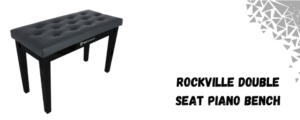
- Solid legs, no wobbles
- Tool-free height or tilt adjustment
- Wide padded seat for grown-ups, kids, or quick swaps
- Surface that’s easy to wipe clean after busy days.
Built for simple setup and steady support, making practice feel natural every time.
Why It’s Worth the Minute
How you sit at the keyboard influences your playing and your mood. Still, don’t be in a hurry to put it badly–take time and get it right. It is little adjustments that will bring you freedom, and when it all falls into place, you will be able to give your full attention to the music.
Provided you’ve deciphered the secret of your own piano system, or discovered a bench that made the practice more amenable to the human spirit, leave a reply and assist your fellow musicians!
Here you can also find amazing drum thrones; alternatively, browse our page to find the best keyboard bench, audio mixers, drum mics, piano bench, keyboard stand, speakers, party speakers, and more.